20 Questions to Ask a Payment Processor Before You Sign
Don’t sign a processing agreement blind. Here are 20 questions to ask about fees, funding, contracts, security and support, plus what a good answer sounds like.

Picking a payment processor can feel like choosing a phone plan. Everyone says they’re the cheapest, the fastest and the friendliest, and the real details are buried in a contract you’ll probably skim.
Here’s a better plan: show up with questions. A good processor will answer them plainly. A shaky one will dodge, get vague or push you to “just sign today.”
These 20 questions are grouped by topic, and each one comes with a note on what a good answer sounds like. If you’d rather start with the big picture, our step-by-step guide to choosing a payment processor is a good companion.
Part 1: Fees and pricing
Fees are where most surprises hide. A low headline rate can still lead to a high bill.
1. What is my full fee structure?
Ask for every charge in writing: per transaction, monthly, gateway, statement, PCI and any annual fees. A good answer is a clear, complete list. A bad one is “it’s just 2.9%.”
2. Is this flat-rate or interchange-plus pricing?
Flat-rate is simple. Interchange-plus shows the bank’s cost and the processor’s markup separately, which is often cheaper as volume grows. Our comparison of flat-rate vs interchange-plus explains the trade-off, and you can browse interchange-plus processors or flat-rate processors to compare.
3. Is this a teaser rate?
Some quotes look great for a few months, then rise. A good processor tells you how long a rate lasts and what it changes to.
4. Can I see a sample monthly statement?
You should be able to read it without a decoder ring. Ask them to walk you through it line by line. If the statement is confusing now, it won’t get clearer later.
5. What’s my estimated effective rate?
Your effective rate is your total fees divided by your sales. A confident provider will estimate it from your volume and average ticket. You can sanity check it with our processing fee calculator.
6. Can my rates change, and how much notice will you give me?
Look for a commitment to written notice and a right to leave if prices jump.
For a full breakdown of what these charges mean, read understanding payment processing fees and making sense of transaction costs.
Part 2: Contract and exit terms
7. How long is the contract, and does it auto-renew?
Month-to-month is the friendliest. If there’s a term, mark the renewal date on your calendar.
8. Is there an early termination fee?
Ask for the exact amount and how it’s calculated. “Only if you cancel” is not an answer.
9. Are there monthly minimums or fees for low volume?
Seasonal businesses should look closely here, because a slow month shouldn’t cost you extra.
10. If I leave, can I take my stored customer data with me?
Saved cards and subscriptions matter. A good processor explains how card data can be migrated securely so you aren’t locked in.
Part 3: Funding and cash flow
11. How soon will I get paid?
Same day, next day or two days? Check the payout time and ask about weekends and holidays.
12. What’s your daily cutoff time?
A late-evening sale might count as tomorrow’s batch. This matters most for restaurants, shops and anyone busy after hours.
13. Do you hold funds or require a reserve?
Some providers keep a percentage of your sales as a rolling reserve, especially for new or higher-risk accounts. Ask how much, for how long and how it’s released. If your business is higher risk, see our guide to processors for high-risk businesses.
Part 4: Security and disputes
14. Are you PCI DSS compliant, and what’s my part in it?
You’re responsible for compliance too. Ask whether there’s a PCI fee and whether they help you complete the paperwork. Our PCI compliance guide walks through it.
15. How is card data protected?
Listen for encryption and tokenization. A good provider can explain them in plain language.
16. What fraud tools are included, and which cost extra?
Basic checks like CVV and address matching should be standard. Our explainer on card verification values shows how they help.
17. How do chargebacks work with you?
Ask about the fee per dispute, how much time you get to respond and what support you’ll receive. Brush up first with our guides on chargebacks and payment reversals.
Part 5: Integration, support and growth
18. Will this work with my website, POS and accounting software?
Don’t assume. Ask for the exact platforms. Shopify merchants can also read picking the right checkout partner and see our list of processors for Shopify.
19. What does support look like when something breaks?
Is there a live person, and when? Is it 24/7 or office hours? Ask who you’d actually talk to if a payout goes missing on a Friday night.
20. Can you support me as I grow?
Ask about new payment methods, more locations, international sales or higher volume. If you expect to expand, our guide on signs you’ve outgrown your payment setup can help you plan ahead.
Red flags to watch for
Pressure to sign today
No written quote
Vague answers about fees or reserves
A contract that’s much longer than the sales pitch
Reluctance to show a real statement
No clear way to cancel
Frequently asked questions
How many processors should I compare?
At least three. That’s enough to spot a quote that’s too good, or too expensive, to be right.
What’s the most important question to ask?
Ask for your total expected monthly cost, not just the rate. It reveals everything else.
Can I negotiate with a payment processor?
Often, yes, especially if you have steady volume. See how to lower your payment processing fees for practical tips.
How often should I review my processor?
At least once a year. Here’s why every business should review its payment setup annually.
Is the cheapest option the best?
Not always. Cheap pricing can come with long contracts, slow payouts or weak support.
The bottom line
You don’t need to be a payments expert to choose well. You just need to ask clear questions and notice how the answers feel. Straight answers usually mean a straight partner.
Ready to start comparing? Browse our full processor directory, or jump to small business processors. You can also see how we rate providers on our methodology page.
More from the blog

What Is a Payment Processor? How It Works, Step by Step
A payment processor moves money between your customer’s bank and yours. Here’s how it works, how it differs from a gateway and merchant account, and what it costs.
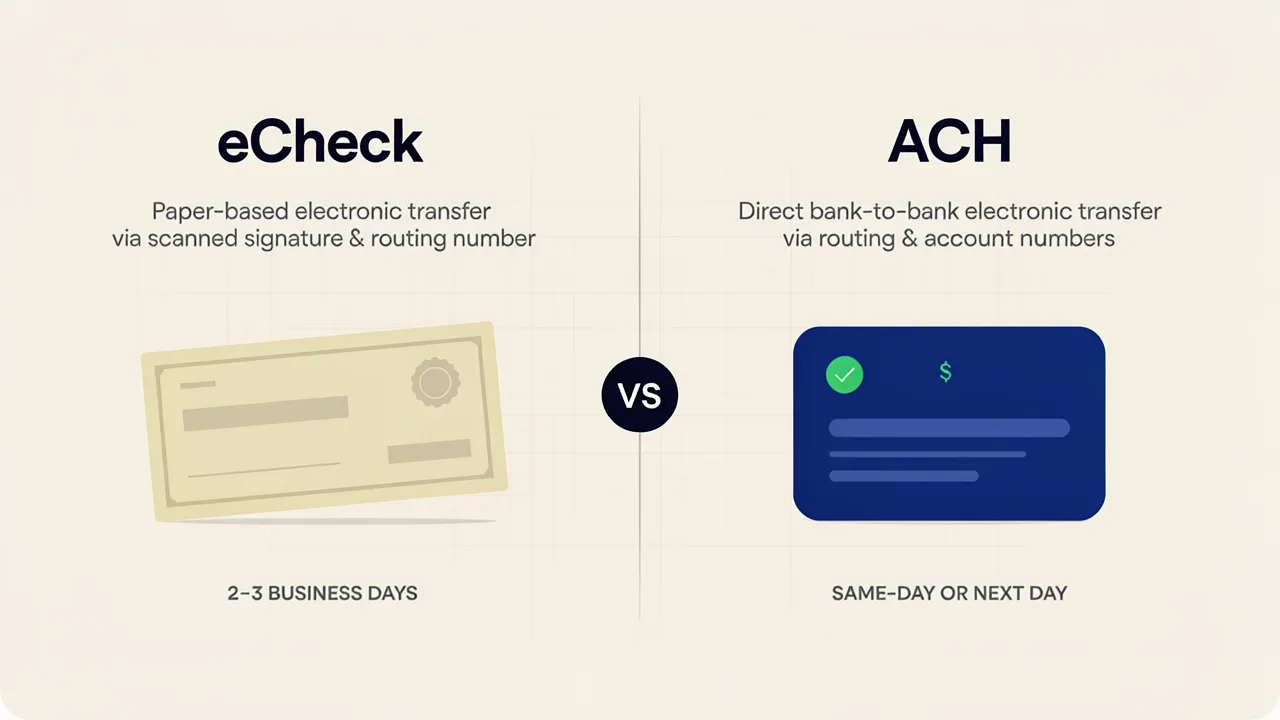
eCheck vs ACH: What’s the Difference and Which Should You Use?
If you’ve ever tried to set up bank payments for your business, you’ve probably hit this wall. One provider says “eCheck,” another says “ACH,” and you’re left wondering if you’re comparing two products or one product with two names.

How to Decline a Venmo Payment: What Happens Next?
Venmo doesn’t offer a simple way to “decline” incoming payments, but that doesn’t mean you’re powerless.