Understanding Payment Processing Fees: What Every Business Should Know
Learn what payment processing fees include, the factors that influence costs, and how businesses can evaluate payment providers more effectively.

Accepting digital payments has become an essential part of running a business. Whether customers pay using credit cards, debit cards, digital wallets, or online banking, every electronic transaction involves processing costs. While these fees may seem straightforward, they often include several components that can affect a business's overall expenses.
Understanding how payment processing fees work helps business owners compare providers, plan operating costs, and select payment solutions that align with their business goals. Rather than focusing solely on the lowest advertised rate, it's important to understand what services are included and how pricing structures differ.
If you're exploring digital payment systems for the first time, start with our complete guide to payment technology to understand the fundamentals.
What Are Payment Processing Fees?
Payment processing fees are charges associated with handling electronic payment transactions. These fees cover the technology, security measures, banking networks, and payment infrastructure required to complete each transaction safely and efficiently.
Whenever a customer makes a purchase, multiple organizations work together to authorize, verify, and settle the payment. The associated costs are generally reflected in the fees charged to the business.
Although pricing varies between providers, understanding the basic structure makes it easier to compare different payment solutions.
Why Do Businesses Pay Processing Fees?
Electronic payments involve much more than transferring money from one account to another.
Behind every successful transaction are systems responsible for:
Verifying payment information
Detecting fraudulent activity
Encrypting sensitive customer data
Communicating with financial institutions
Authorizing transactions
Settling funds securely
Processing fees help support these services while maintaining a secure and reliable payment experience for both businesses and customers.
Common Types of Payment Processing Fees
Different providers may use different pricing models, but businesses commonly encounter several types of fees.
Transaction Fees
This is the most common charge and applies to each successful payment processed.
The exact amount may depend on:
Payment method
Transaction amount
Card type
Sales channel
Business category
Monthly Service Fees
Some providers charge a monthly fee that covers account maintenance, reporting tools, customer support, or additional payment services.
Not every provider includes this charge, so it's important to review pricing carefully.
Payment Gateway Fees
Businesses accepting online payments often use a secure gateway to transmit customer payment information.
Depending on the provider, gateway services may be included in the overall package or billed separately.
Learn more about secure online transactions in our guide to digital payment platforms.
Chargeback Fees
When customers dispute a transaction, businesses may incur chargeback fees while the payment is reviewed.
Understanding a provider's dispute management process can help businesses prepare for these situations.
International Transaction Fees
Businesses serving customers across multiple countries may pay additional fees for processing international payments or currency conversions.
These costs vary depending on the payment provider and supported currencies.
Factors That Influence Processing Costs
No two businesses have identical payment requirements. Several factors influence overall processing expenses.
Business Type
Industries with higher transaction risks may have different pricing structures compared to lower-risk businesses.
Average Transaction Value
Businesses processing larger transactions may receive different pricing than businesses handling frequent low-value purchases.
Monthly Processing Volume
Some providers offer customized pricing based on monthly transaction volumes.
Payment Methods Accepted
Accepting multiple payment methods, such as digital wallets or international cards, may influence processing costs.
Online vs In-Person Transactions
Processing costs may differ depending on whether payments are accepted through physical terminals or online checkout systems.
How Merchant Services Affect Pricing
A merchant services provider often offers more than basic payment acceptance.
Depending on the provider, services may include:
Payment processing
Fraud prevention
Reporting tools
Business analytics
Recurring billing
Customer support
Payment gateway integration
Comparing these features helps businesses evaluate overall value rather than focusing solely on transaction fees.
If you're comparing providers, explore our resource for evaluating merchant payment partners.
Why Credit Card Processing Services Matter
Credit card payments remain one of the most widely used payment methods worldwide.
Reliable processing services can help businesses:
Authorize payments quickly
Reduce payment failures
Improve checkout experiences
Protect customer payment information
Manage disputes efficiently
Businesses should compare reliability, security, and available features before making a decision.
Our overview of secure card acceptance solutions explains the key factors businesses should consider.
Choosing the Right Business Payment Solution
While pricing is important, it shouldn't be the only consideration.
A well-rounded payment solution should also provide:
Strong security features
Multiple payment methods
Easy software integrations
Detailed reporting
Scalability
Responsive customer support
Selecting a provider based on overall value can support long-term business growth.
Questions to Ask Before Comparing Providers
Before signing up with a payment provider, consider asking:
What fees are included in the quoted pricing?
Are there monthly or annual service charges?
Are payment gateway services included?
What support is available for chargebacks?
How quickly are funds deposited?
Does the platform integrate with existing business software?
Can pricing change as transaction volume grows?
These questions help businesses make informed comparisons beyond headline rates.
Building a Cost-Effective Payment Strategy
Reducing payment expenses doesn't always mean choosing the provider with the lowest advertised fees.
Instead, businesses should focus on:
Understanding the complete pricing structure
Selecting features that match operational needs
Improving payment security
Reducing failed transactions
Monitoring payment performance regularly
A balanced approach often delivers better long-term value than focusing on pricing alone.
Businesses looking to improve payment efficiency can also explore our business software comparison guide for additional insights.
Final Thoughts
Payment processing fees are an essential part of accepting digital payments but understanding how they work can help businesses make smarter financial decisions. By comparing pricing structures, evaluating included services, and considering long-term business needs, organizations can choose payment solutions that support both operational efficiency and customer satisfaction.
Whether you're launching a new business or reviewing your current payment setup, taking time to understand processing costs is an important step toward selecting the right payment partner.
More from the blog
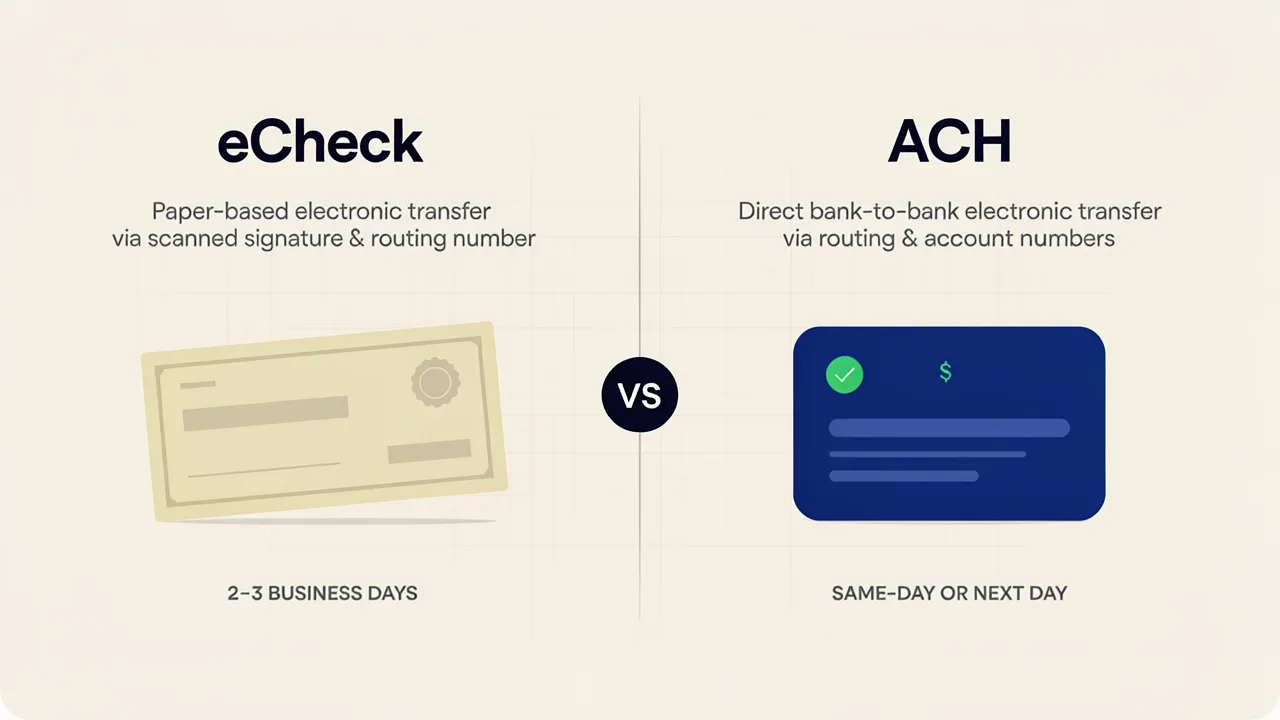
eCheck vs ACH: What’s the Difference and Which Should You Use?
If you’ve ever tried to set up bank payments for your business, you’ve probably hit this wall. One provider says “eCheck,” another says “ACH,” and you’re left wondering if you’re comparing two products or one product with two names.

How to Decline a Venmo Payment: What Happens Next?
Venmo doesn’t offer a simple way to “decline” incoming payments, but that doesn’t mean you’re powerless.

Square Fees in 2026: Here's What You Should Know
Square fees in 2026 are 2.6% + 15 cents in-person, 2.9% + 30 cents online, and 3.5% + 15 cents keyed-in. See the full breakdown and when Square may cost more than alternatives.