Making Sense of Transaction Costs for Growing Businesses
Discover what influences transaction costs, why pricing varies between providers, and how businesses can make informed decisions to improve profitability.

Introduction
Every business that accepts digital payments incurs transaction-related expenses. While these costs may seem straightforward, they often consist of several components that can significantly impact profitability over time.
Understanding how pricing works allows business owners to compare providers more effectively, identify unnecessary expenses, and choose solutions that support long-term growth. Rather than focusing only on the advertised rate, businesses should evaluate the complete pricing structure and the value they receive.
Why Transaction Costs Vary
Not every business pays the same amount for accepting customer payments. Pricing depends on several factors, including industry, average transaction value, sales volume, and the methods customers use to pay.
Businesses with higher processing volumes may qualify for more competitive rates, while companies operating in industries with greater fraud risks may encounter additional charges.
Taking time to understand these differences help avoid unexpected expenses.
Common Charges Businesses Should Understand
Beyond the standard transaction rate, merchants may encounter other fees depending on their provider and account type.
These can include:
Monthly service charges
Gateway access fees
Chargeback costs
Equipment rental
Statement fees
Early termination fees
International transaction costs
Reviewing the complete pricing schedule before signing an agreement helps businesses avoid surprises later.
Looking Beyond the Lowest Price
Choosing a provider based solely on the cheapest advertised rate isn't always the best decision.
A reliable solution should also offer:
Strong security measures
Responsive customer support
Consistent system uptime
Easy integration with existing tools
Detailed reporting and analytics
Sometimes paying slightly more delivers greater overall value through improved reliability and customer experience.
Reducing Unnecessary Expenses
Businesses can often lower operational costs by reviewing their payment setup regularly.
Helpful strategies include:
Comparing provider pricing annually
Monitoring chargeback activity
Encouraging secure payment methods
Keeping software updated
Using fraud prevention tools
Training employees on payment security
Small improvements can create meaningful savings over time.
Transparency Builds Better Business Decisions
Hidden costs are one of the biggest frustrations for merchants.
A trustworthy provider should clearly explain:
Every applicable fee
Billing frequency
Contract terms
Cancellation policies
Available support services
Clear pricing allows businesses to forecast expenses accurately and make confident financial decisions.
Choosing a Long-Term Solution
As businesses grow, their payment needs often become more complex.
A scalable solution should continue supporting:
Higher sales volumes
Multiple business locations
Online and in-person transactions
International customers
Recurring billing
Advanced reporting
Planning ahead reduces the need for costly migrations later.
Stay Informed Before Comparing Providers
Understanding transaction pricing is only one part of selecting the right payment partner. Businesses should also evaluate available technologies, security standards, customer support, and long-term scalability before making a decision.
If you're looking for reliable information that simplifies the selection process, explore the complete payment resource available on the Payment Processing Guide homepage. It offers valuable insights to help businesses make informed choices based on their unique needs.
Conclusion
Transaction expenses influence every business that accepts digital payments. While pricing structures may seem complicated at first, learning what affects costs and comparing providers carefully helps businesses protect their bottom line.
Taking a thoughtful approach today can lead to better financial planning, improved customer experiences, and sustainable business growth.
More from the blog

What Is a Payment Processor? How It Works, Step by Step
A payment processor moves money between your customer’s bank and yours. Here’s how it works, how it differs from a gateway and merchant account, and what it costs.

20 Questions to Ask a Payment Processor Before You Sign
Don’t sign a processing agreement blind. Here are 20 questions to ask about fees, funding, contracts, security and support, plus what a good answer sounds like.
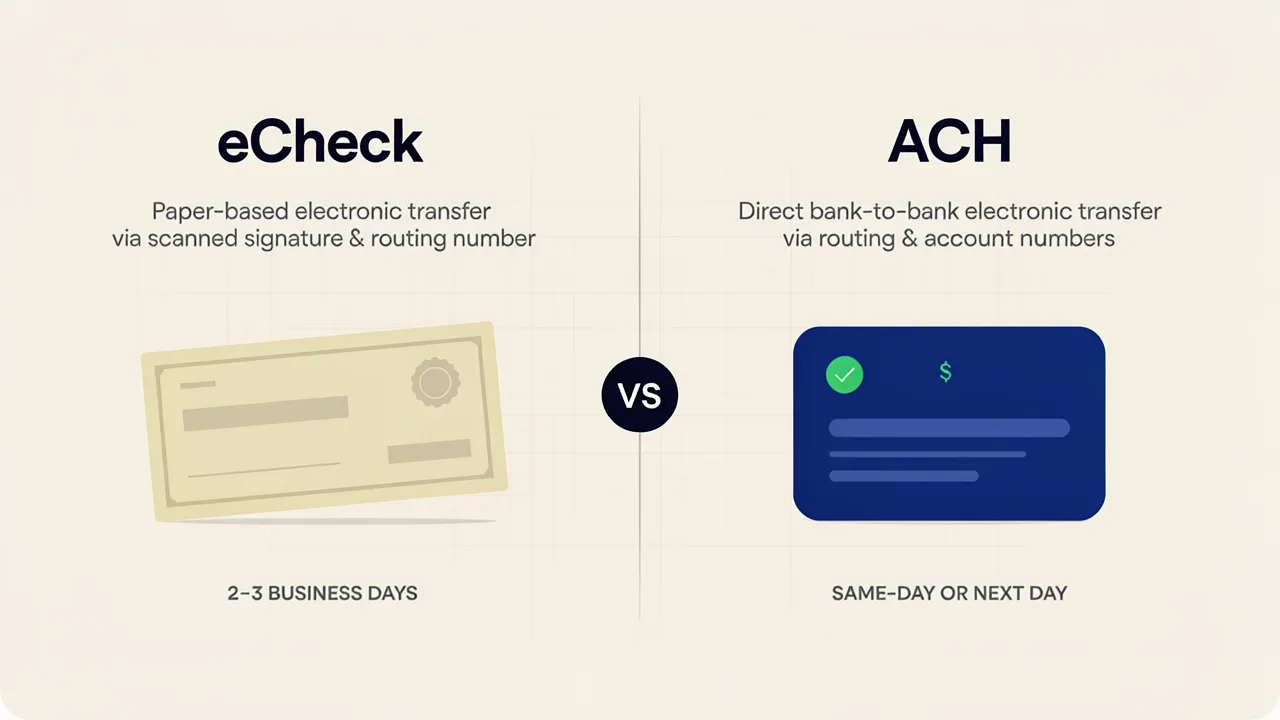
eCheck vs ACH: What’s the Difference and Which Should You Use?
If you’ve ever tried to set up bank payments for your business, you’ve probably hit this wall. One provider says “eCheck,” another says “ACH,” and you’re left wondering if you’re comparing two products or one product with two names.