How Payment Processing Software Improves Business Efficiency
In today's digital economy, businesses are expected to offer fast, secure, and convenient payment experiences.

In today's digital economy, businesses are expected to offer fast, secure, and convenient payment experiences. Whether customers shop online, pay through a mobile device, or make purchases in-store, they expect transactions to be completed quickly and without complications. Behind every successful payment is a reliable payment processing system that keeps everything running smoothly.
Payment processing software has become an essential business tool because it does much more than authorize transactions. It helps companies automate payment workflows, improve financial reporting, reduce manual tasks, strengthen security, and create a better customer experience.
For startups, small businesses, and large enterprises alike, investing in the right payment technology can improve daily operations while supporting long-term growth.
If you're new to digital payments, our modern payment infrastructure guide explains how today's payment ecosystems work and why choosing the right technology matters.
What Is Payment Processing Software?
Payment processing software is a digital solution that manages electronic payment transactions between customers, merchants, financial institutions, and payment networks.
Its primary responsibility is to ensure that payments are processed accurately, securely, and efficiently.
Modern software often includes features such as:
Payment authorization
Transaction management
Invoice generation
Recurring billing
Refund processing
Fraud detection
Payment reporting
Customer payment history
Rather than handling payments manually, businesses can automate these processes and reduce administrative workload.
Why Businesses Need Payment Processing Software
Consumers expect businesses to accept multiple payment methods, including credit cards, debit cards, digital wallets, and contactless payments.
Without reliable software, businesses may face:
Slow checkout experiences
Increased payment errors
Security vulnerabilities
Manual bookkeeping
Poor customer experiences
Implementing a modern payment solution helps businesses process transactions more efficiently while improving operational performance.
Faster Payment Processing
Speed plays an important role in customer satisfaction.
When payment systems respond quickly, customers spend less time waiting at checkout, whether shopping online or in person.
Faster processing also helps businesses:
Reduce abandoned online carts
Improve cash flow
Increase operational efficiency
Enhance customer confidence
A smooth payment experience often encourages repeat business.
Improved Financial Accuracy
Manual payment tracking increases the risk of errors.
Payment processing software automatically records transactions, making it easier to:
Track daily sales
Generate financial reports
Monitor payment activity
Reconcile accounts
Prepare financial statements
Automation reduces administrative work while improving accuracy.
Enhanced Security
Protecting customer payment information is one of the most important responsibilities for any business.
Modern payment software includes multiple security features designed to safeguard sensitive data.
Common protections include:
PCI DSS compliance
Data encryption
Tokenization
Fraud monitoring
Secure authentication
These measures help reduce the risk of unauthorized transactions and build customer trust.
Supporting Multiple Payment Methods
Today's customers expect flexibility.
Modern payment software typically supports:
Credit cards
Debit cards
Mobile wallets
Contactless payments
Bank transfers
Subscription payments
Online invoices
Offering multiple payment options creates a better purchasing experience while helping businesses reach more customers.
Better Business Insights
Payment software often includes built-in reporting and analytics.
Business owners can monitor:
Sales trends
Transaction volume
Customer payment preferences
Refund activity
Revenue growth
These insights help businesses make informed operational and financial decisions.
Easy Integration With Business Systems
One of the greatest advantages of modern payment software is its ability to integrate with other business tools.
Common integrations include:
Accounting software
Inventory management systems
Customer relationship management (CRM) platforms
E-commerce websites
Point-of-sale (POS) systems
Connecting these systems reduces duplicate work and improves overall efficiency.
Businesses looking for a reliable, trusted payment partner should also evaluate integration capabilities before making a decision.
Supporting Business Growth
As businesses grow, payment requirements become more complex.
Modern payment software helps organizations scale by supporting:
Higher transaction volumes
Multiple business locations
International payments
Multi-currency transactions
Recurring billing
Employee access controls
Choosing scalable software today reduces the need for major system changes in the future.
Improving the Customer Experience
Customer satisfaction often depends on how easy it is to complete a purchase.
Reliable payment software helps deliver:
Faster checkout
Secure transactions
Multiple payment options
Digital receipts
Quick refunds
Mobile-friendly payments
A positive payment experience can strengthen customer loyalty and encourage repeat purchases.
If you're comparing payment technologies, explore our digital payment tools for businesses to understand which features best support different business models.
Choosing the Right Software
Before selecting a payment solution, businesses should consider:
Security features
Ease of use
Integration capabilities
Reporting tools
Customer support
Pricing transparency
Scalability
Every business has unique requirements, so it's important to evaluate software based on operational needs rather than price alone.
Frequently Asked Questions
Can payment processing software help small businesses?
Yes. Many solutions are designed specifically for small businesses and offer features that simplify payment acceptance, invoicing, and financial reporting.
Does payment processing software improve security?
Most modern platforms include security measures such as encryption, tokenization, and fraud detection to help protect payment information.
Can the software integrate with accounting systems?
Many payment solutions integrate with accounting, inventory, CRM, and e-commerce platforms to streamline business operations.
Is payment processing software only for online businesses?
No. Retail stores, restaurants, healthcare providers, service businesses, and many other industries use payment processing software to manage transactions.
Final Thoughts
Payment processing software has become much more than a tool for accepting payments. It supports financial accuracy, improves operational efficiency, strengthens security, and enhances the customer experience. As digital payments continue to grow, businesses that invest in reliable payment technology are better positioned to meet customer expectations and adapt to changing market demands.
Whether you're launching a new business or upgrading your existing payment system, understanding the capabilities of payment processing software is an important step toward building a more efficient and scalable operation.
More from the blog

What Is a Payment Processor? How It Works, Step by Step
A payment processor moves money between your customer’s bank and yours. Here’s how it works, how it differs from a gateway and merchant account, and what it costs.

20 Questions to Ask a Payment Processor Before You Sign
Don’t sign a processing agreement blind. Here are 20 questions to ask about fees, funding, contracts, security and support, plus what a good answer sounds like.
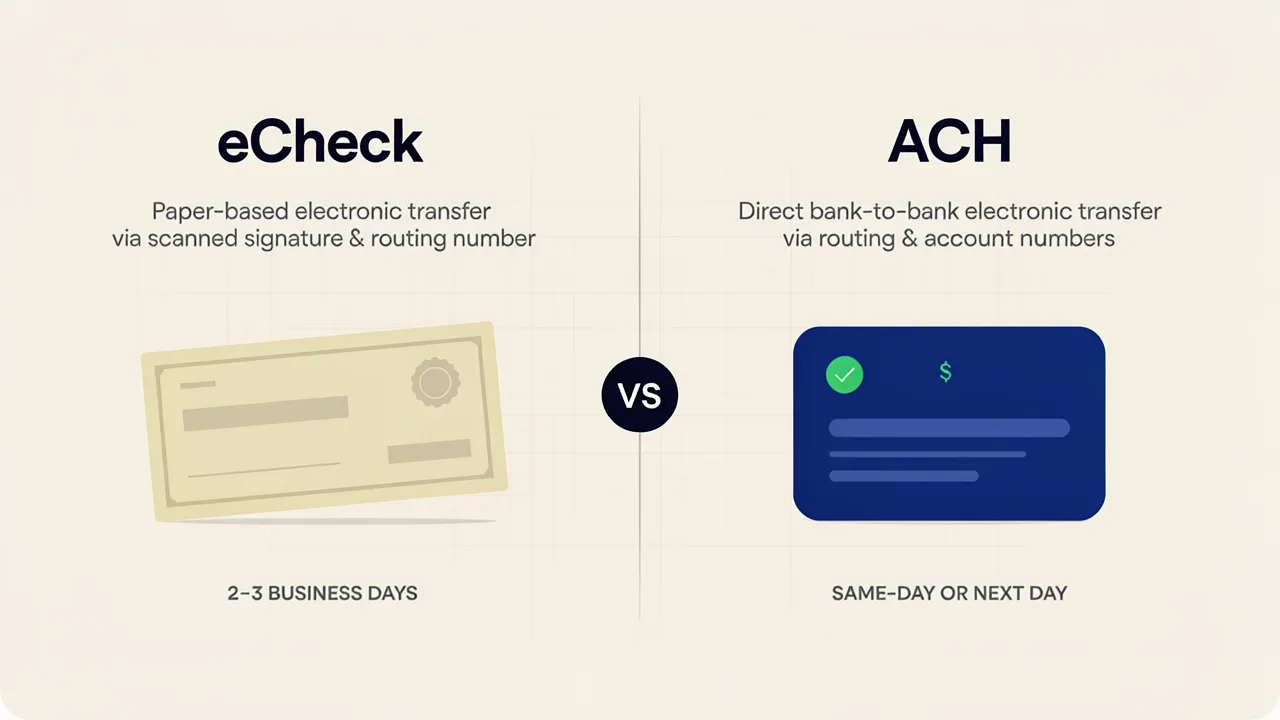
eCheck vs ACH: What’s the Difference and Which Should You Use?
If you’ve ever tried to set up bank payments for your business, you’ve probably hit this wall. One provider says “eCheck,” another says “ACH,” and you’re left wondering if you’re comparing two products or one product with two names.